Marvel Rivals players who blame teammates should watch what Flats found in a Grandmaster lobby
Want articles like this for your own video to promote it on YouTube and Google? Order them through the Telegram bot @sat_sit_bot. It writes articles around your video, embeds the video and publishes them on popular niche websites (no ads). Free trial — 50 articles.
· based on the channel Flats
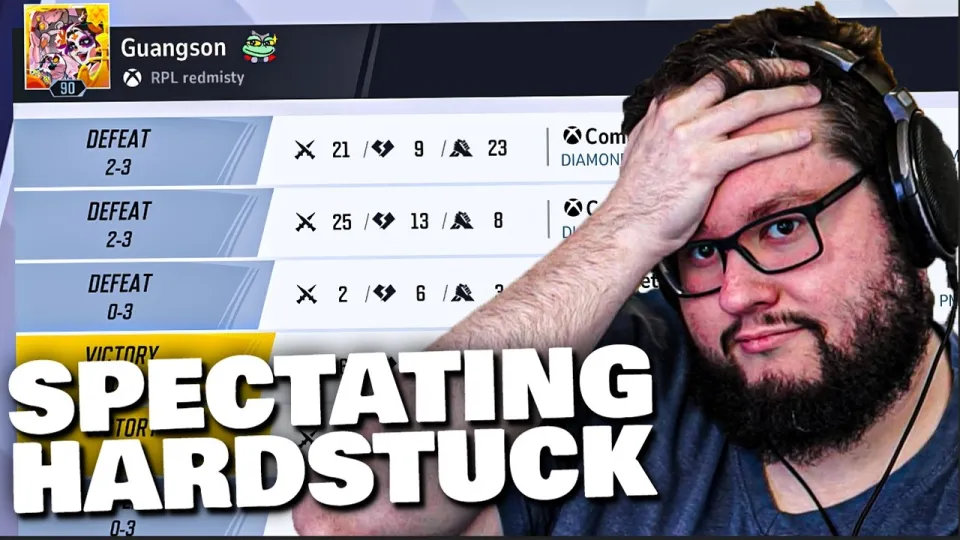
Marvel Rivals players who feel hardstuck usually blame their teammates, and the fastest way to test that theory is to have someone else watch your gameplay. That is exactly what Flats did: he spectated a Marvel Rivals player who claimed he was trapped in Grandmaster because of bad teammates, and the review showed the opposite — the mistakes were his own, from ability usage to positioning to basic map awareness. If you are stuck in Marvel Rivals and convinced your team is the problem, this breakdown is the reality check you need before your next queue. You can watch Flats run these reviews live on his Twitch channel.
What the Marvel Rivals spectate review actually showed
The player in the review was a Grandmaster-ranked Spider-Man main who had switched to support and was running Cloak & Dagger, and the summary that stuck was that he was playing "Dagger holding the Cloak" — using the character's kit far below its potential. A few concrete patterns came out of the session:
- Ability value was near zero. The invisibility tool was used as a panic button rather than as a setup or escape tool, and the ultimate was repeatedly dropped without a plan, drawing the biggest reaction of the review.
- Map awareness was missing. At one point the player walked straight past a health pack while visibly searching for a health pack — the kind of detail that explains a lot of otherwise mysterious deaths.
- Blame was external. The player's framing was that teammates were throwing, while the footage showed a support player who was not generating the pressure or the saves his role requires.
- Rank did not match the play. Grandmaster is a high tier in Marvel Rivals, and the gap between the rank badge and the decisions on screen was the whole point of the video.
None of this requires the player to be mechanically terrible. It requires him to be unaware — and unawareness is fixable in a way that raw aim often is not.
Why "my teammates hold me back" is usually the wrong diagnosis in Marvel Rivals
In a six-player team game, teammates genuinely do cost you games, but they cannot explain a consistent plateau. The math is simple: every player in your lobby has teammates, and the ones who climb are the ones who convert the winnable games. A player with a negative win rate who still sits in Grandmaster is being carried by the ranking system's protection, not by his own impact — and that gap between rank and contribution is exactly what a spectate review exposes.
The ego problem is structural in Marvel Rivals. The game is free to play, the roster is full of popular heroes with high skill ceilings, and players who main a flashy duelist often carry the mindset of a carry while playing a role that demands discipline. When the scoreboard does not match the self-image, the easiest explanation is the team. The harder and more useful explanation is that your cooldowns, your positioning and your target priority are all below the level your rank claims.
The Cloak & Dagger problem: playing half a hero
Cloak & Dagger is one of the most flexible supports in Marvel Rivals because the kit is effectively two heroes in one, and the review's most quoted line — that the player was playing Dagger while holding the Cloak — captures a common failure. Dagger provides healing and utility; Cloak provides damage, debuffs and an escape. A player who never meaningfully swaps is leaving half the character's value on the table, and in a Grandmaster lobby that missing half is the difference between a support who saves fights and one who watches them end.
The same logic applies to the ultimate. Support ultimates in Marvel Rivals are fight-defining tools, and using one without tracking enemy cooldowns or your team's position turns a win condition into a wasted button. If you want to fix one thing after watching the review, fix this: before every ultimate, name what it is for — a push, a hold, a save — out loud if you have to.
Common doubts from viewers of the breakdown
Spectate reviews like this one always trigger the same arguments in chat, and they are worth answering directly.
- "Isn't it unfair to judge one game?" One game is a sample, but the patterns that show up — ignoring health packs, wasting invisibility, ulting with no plan — are habits, not accidents, and they repeat across dozens of games.
- "Does rank even mean anything in Marvel Rivals?" Rank measures results over time, and the system does allow slow climbs with a losing record. That is why a Grandmaster badge can coexist with metal-rank decisions, as viewers of the review pointed out.
- "Wouldn't a name change fix this?" It fixes the embarrassment, not the win rate. The only thing that changes the outcome is changing the decisions.
- "Is this just content farming?" The format works because the lessons transfer: every viewer who recognizes one of these mistakes in their own gameplay gets value from a stranger's humiliation.
How to actually stop being hardstuck in Marvel Rivals
If you recognize yourself in the review, the fix is a short checklist rather than a new main. Start with these steps:
- Record and rewatch one loss per session. Watch only your own deaths and ask what cooldown or position would have prevented each one.
- Learn the full kit of your hero. If you play Cloak & Dagger, practice swapping in both directions under pressure; if you play a duelist, learn the escape before the engage.
- Track your ultimates. Write down what each ultimate was used for after the game. If you cannot remember, it did nothing.
- Use the map. Health packs, flank routes and high ground are free resources; walking past a health pack while looking for one is a symptom of playing on autopilot.
- Drop the blame habit. Mute toxic chat if you have to, but keep your own mistakes in the review, not your teammates'.
Do this for a couple of weeks and the plateau usually breaks — not because the teammates improved, but because you stopped needing them to.
Where to watch more Marvel Rivals spectate reviews
Flats built his audience on ranked reviews and coaching-style breakdowns, first in Overwatch and now in Marvel Rivals, and the format is the same every time: a player submits or gets picked, the gameplay is watched live, and the mistakes are named without much mercy. The channel's clips and edited videos collect the best of these sessions, and the live show is where new ones happen. If you want your own gameplay reviewed, the stream is the place to ask.
All the places to follow the creator:
- https://www.twitch.tv/flats
- https://discord.gg/flats
- https://twitter.com/Flats_Ow
- https://www.tiktok.com/@flats_ow
- https://www.facebook.com/FlatsTTV
The takeaway from Flats' Marvel Rivals review
The player who claimed he was hardstuck in Marvel Rivals proved the opposite of his own point: his teammates were not the reason he was stuck, his decisions were. The review by Flats turns one Grandmaster lobby into a checklist any player can use — full kit usage, deliberate ultimates, map awareness and honest self-assessment. Rank protection can carry a negative win rate upward, but it cannot teach you to play Cloak & Dagger as two heroes or to notice a health pack you just walked past. If you want to see the next review live and ask your own questions, join Flats on Twitch — the streams are where these breakdowns happen first.
Key takeaways
- Flats spectated a Marvel Rivals player who insisted his teammates were holding him back in Grandmaster.
- The player was a Spider-Man main who switched to support and played Cloak & Dagger as "Dagger holding the Cloak".
- He walked past a health pack while looking for a health pack, and his ultimate usage drew the harshest criticism.
- The review became a case study in ego-driven ranked play: a negative win rate carried upward by the system, not by skill.
- Flats streams live on Twitch at twitch.tv/flats, where similar spectate reviews are requested by viewers.
Source: I Spectated Someone Who Claimed To Be Hardstuck In Marvel Rivals · Markdown version
Questions & answers
Why do Marvel Rivals players get stuck in Grandmaster despite a negative win rate?
The ranked system rewards volume as much as quality, so a player who queues constantly can drift upward even while losing more than he wins. That produces a Grandmaster badge attached to decision-making that belongs several tiers lower, which is exactly the gap a spectate review exposes.
What does "playing Dagger holding the Cloak" mean?
It means using only half of Cloak & Dagger's kit. Dagger handles healing and utility while Cloak brings damage, debuffs and an escape, and a player who never swaps loses a large part of the hero's value in every fight.
Is it worth getting my gameplay reviewed if I think my teammates are the problem?
Yes, precisely because the review tests that belief. Watching your own deaths and cooldown usage with someone else naming the mistakes is faster than grinding another hundred games with the same habits.
What is the fastest fix for a support player who keeps losing in Marvel Rivals?
Start with ultimate discipline and map awareness. Name the purpose of every ultimate before using it, learn both forms of your hero under pressure, and use health packs and cover instead of relying on healing you never receive.